Why a turbo diesel needs cool air
A turbocharger makes power by compressing air and pushing more of it into the engine. The catch is that compressing air heats it up, and hot air is less dense. Less dense air carries less oxygen into each cylinder, so combustion becomes less efficient.
That's the intercooler's job. It sits at the front of the vehicle, between the turbo and the engine, and works like a radiator for the intake air. Hot air from the turbo passes through the core, fresh air flowing across the outside draws the heat away, and cooler, denser air goes on to the engine.
When intake temperatures climb too high, the engine management system steps in to protect the engine, typically by pulling back fuelling. The result is less power, right when you're asking for more.
Where the factory intercooler sits on the V6
On the Next Gen Ranger V6, the factory intercooler is on the small side to begin with, and it sits low and forward in the front end.
Fit a bullbar and winch, and the bar and winch mount sit directly in front of it. An intercooler can only shed heat as fast as air moves across it, so once that airflow is blocked, the core can't do its job properly.
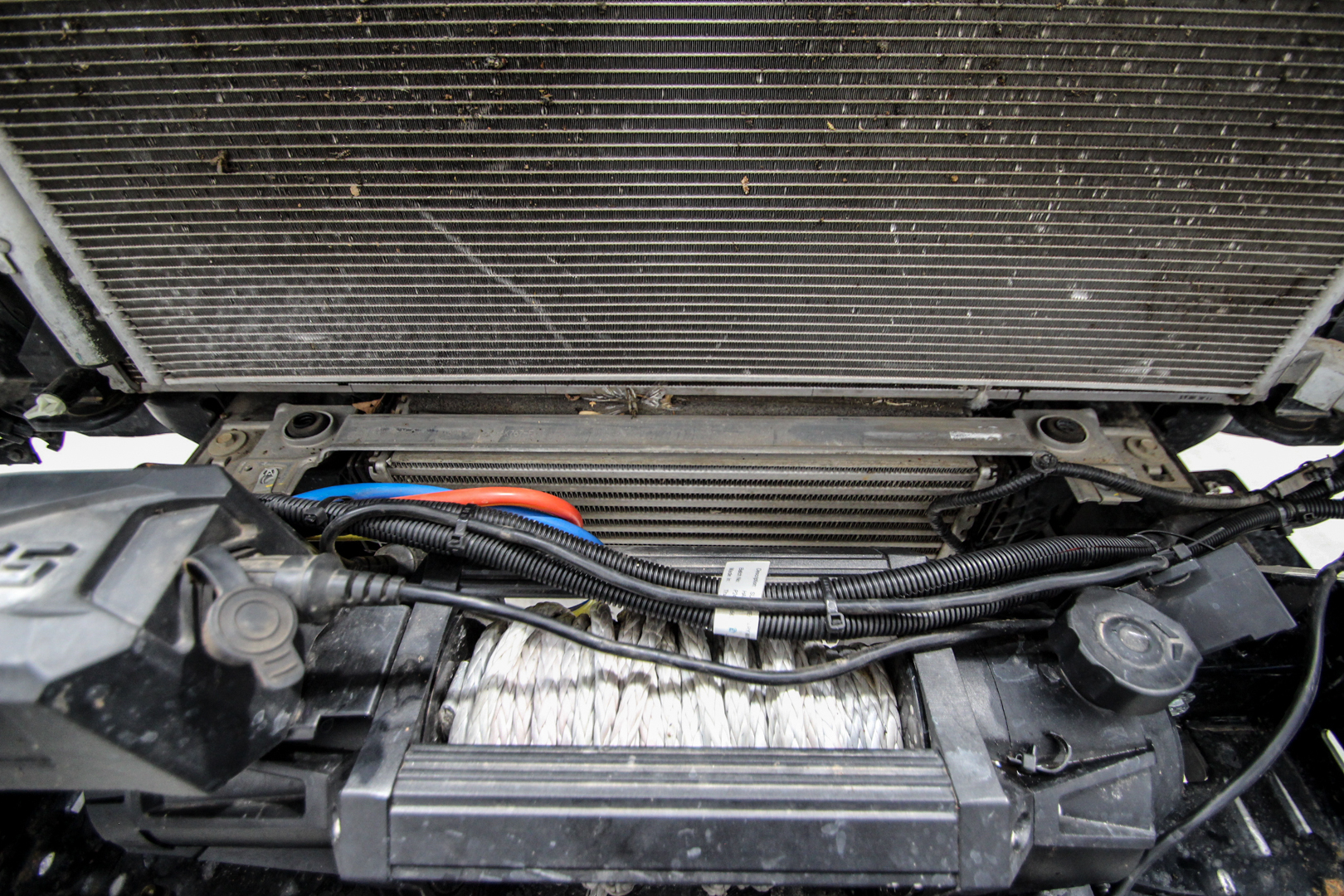
We see it on the dyno. With a bar fitted, intake temperatures on the V6 climb quickly, and they do it right when the engine is working hardest.
Why towing makes it worse
A quick overtake is a short burst of load, and the intercooler has time to recover afterwards. Towing is different. Long climbs, headwinds and hot days mean the engine works hard for long stretches, and heat keeps building in the intake air.
This is where heat soak comes in. When an intercooler can't get rid of heat as fast as it's coming in, the core itself heats up and the air passing through it stays hot. A small core with restricted airflow reaches that point sooner.
The transmission is under the same sustained load, which is why we often pair the intercooler with an HPD (High Performance Diesel) transcooler on Rangers and Everests that tow, to keep transmission temperatures in check.
The fix: the HPD intercooler kit
The HPD intercooler kit is designed specifically for the 3.0L V6 in the RA Ranger, Everest and NF Amarok, and it tackles the problem in two ways.
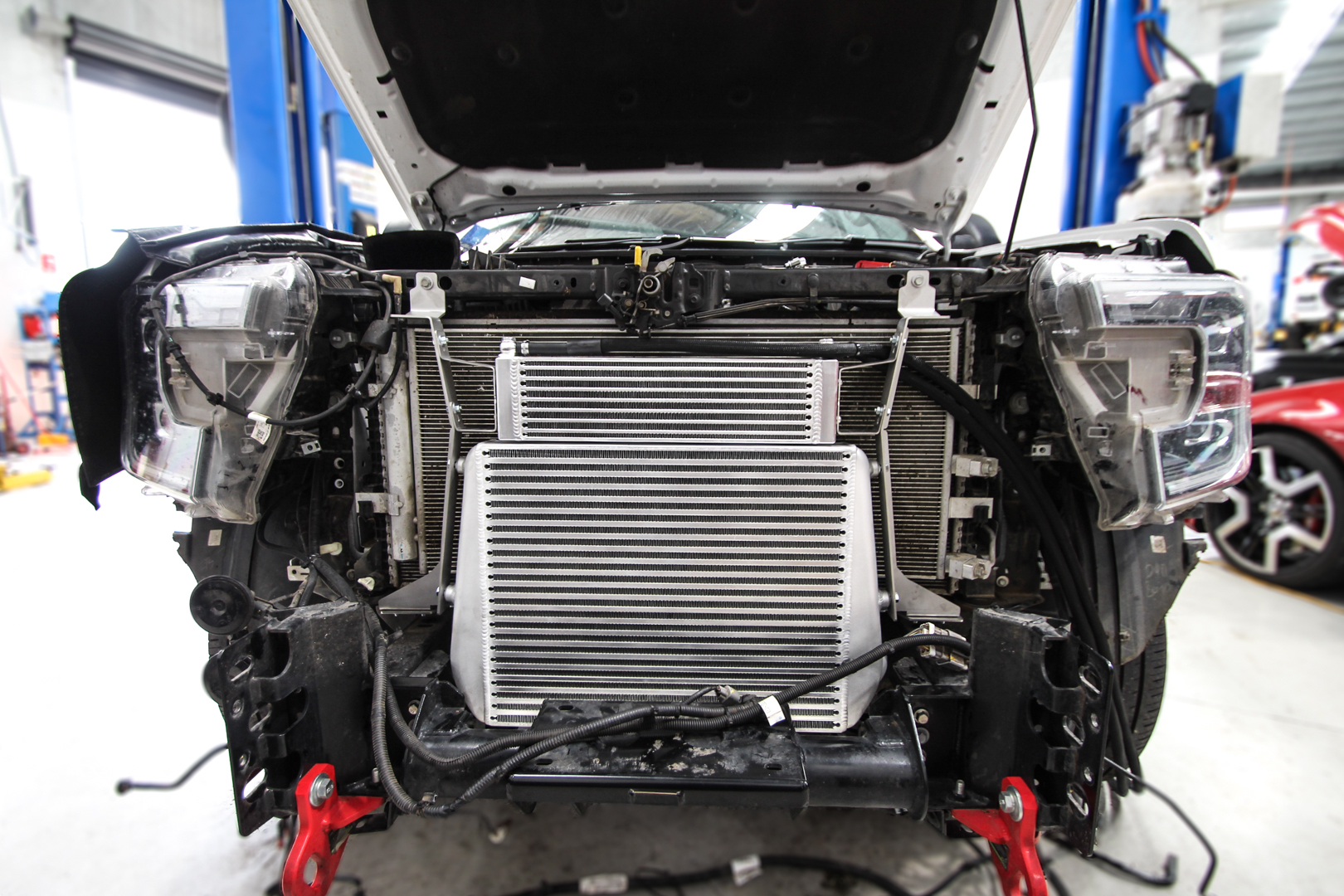
First, it's a larger bar-and-plate core with cast alloy tanks, giving it more capacity to absorb and shed heat. Second, it moves the core higher in the front end, clear of the winch, so it isn't sitting directly behind the mount.
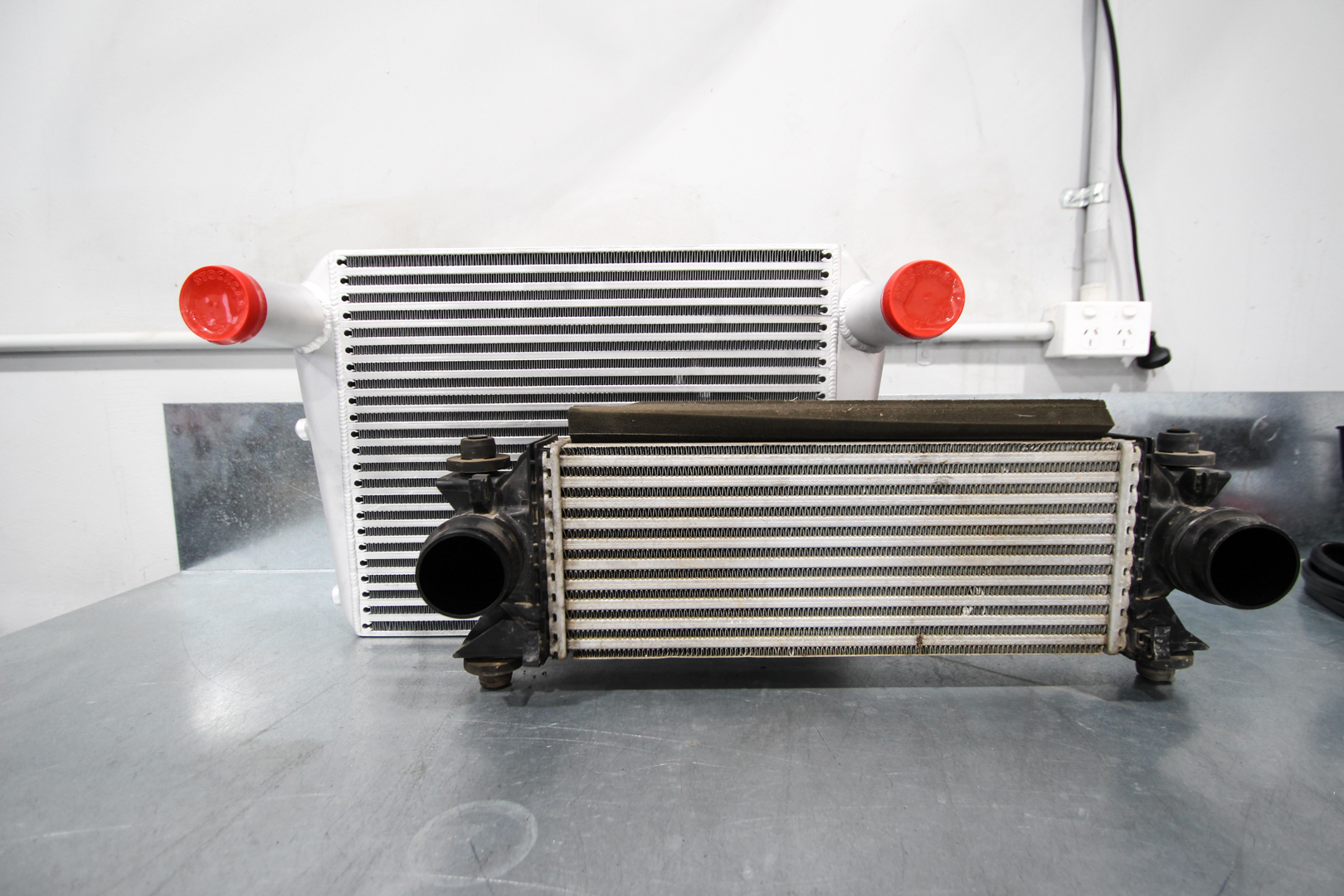
- Larger bar-and-plate core — with cast alloy tanks
- Repositioned higher — clear of the winch
- Alloy piping and silicone joiners — throughout the kit
- Built for bar and winch fitment — designed to work with both fitted
Why the intercooler comes before the tune
A tune adds fuelling and boost to make more power, and more power means more heat in the intake air. On a Ranger with a bar and the factory intercooler, that extra heat lands on a core that's already working against restricted airflow.
Fitting the intercooler first gives the calibration cooler, denser air to work with, so the gains hold up under sustained load instead of fading as temperatures rise.
The result
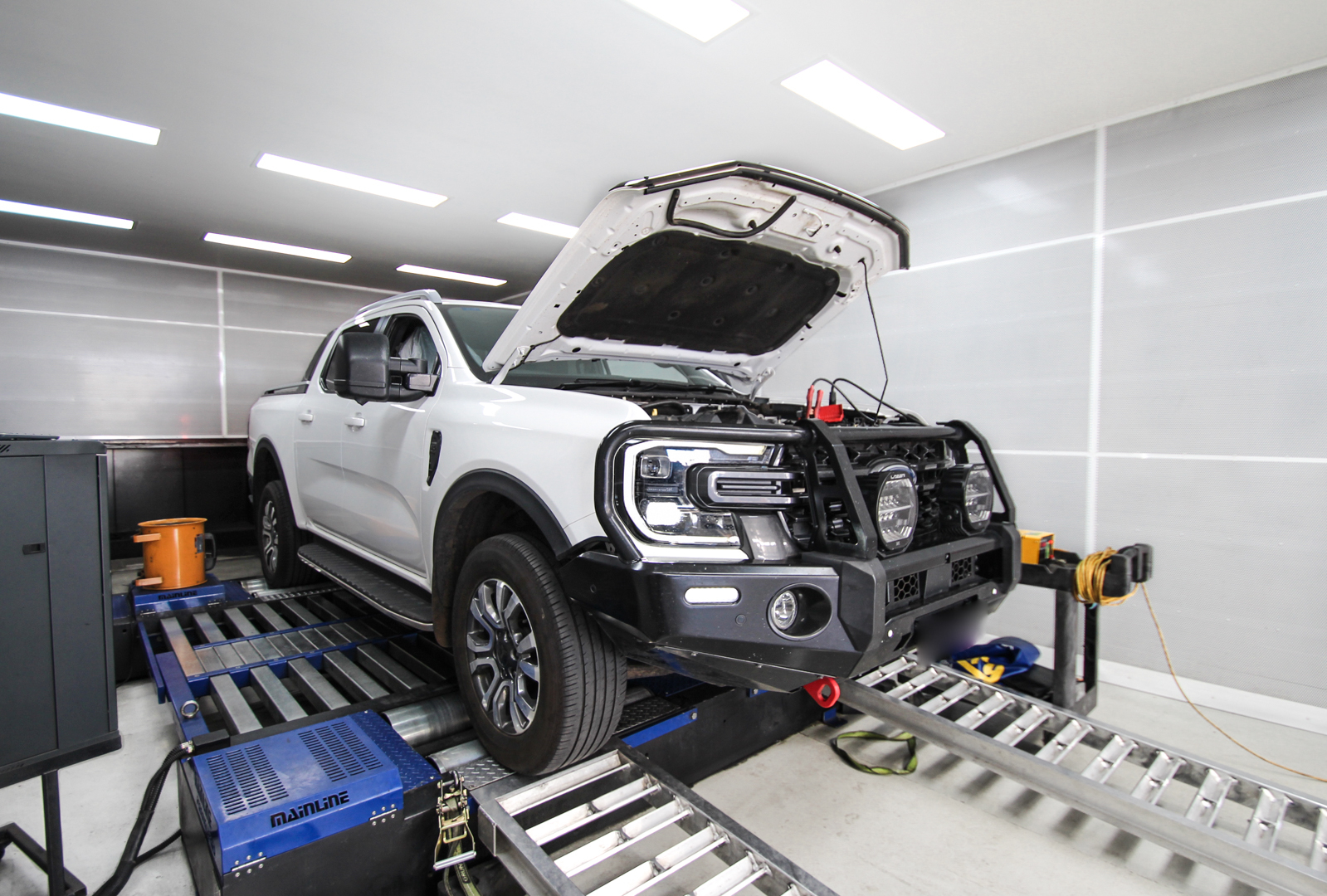
On a recent V6 build, we fitted the HPD intercooler and HPD transcooler, then finished it with a GPD custom tune.
≈20%
More power
≈20%
More torque
HPD
Intercooler
HPD
Transcooler
Gains measured on our dyno on one V6 build with HPD intercooler, HPD transcooler and GPD tune.
Who should be looking at this
If you have a bullbar fitted, or one is going on soon, an intercooler upgrade should be first on your list. The same goes for anyone running a winch, towing a van, boat or trailer, or loading their Ranger or Everest up for long-distance touring.
This article and the HPD kit cover the 3.0L V6.
If you run the 2.0L bi-turbo, give the team a call and we'll talk you through your options.
See our tuning for the Ford Ranger and Ford Everest.